Installation
-それぞれのかたりて-
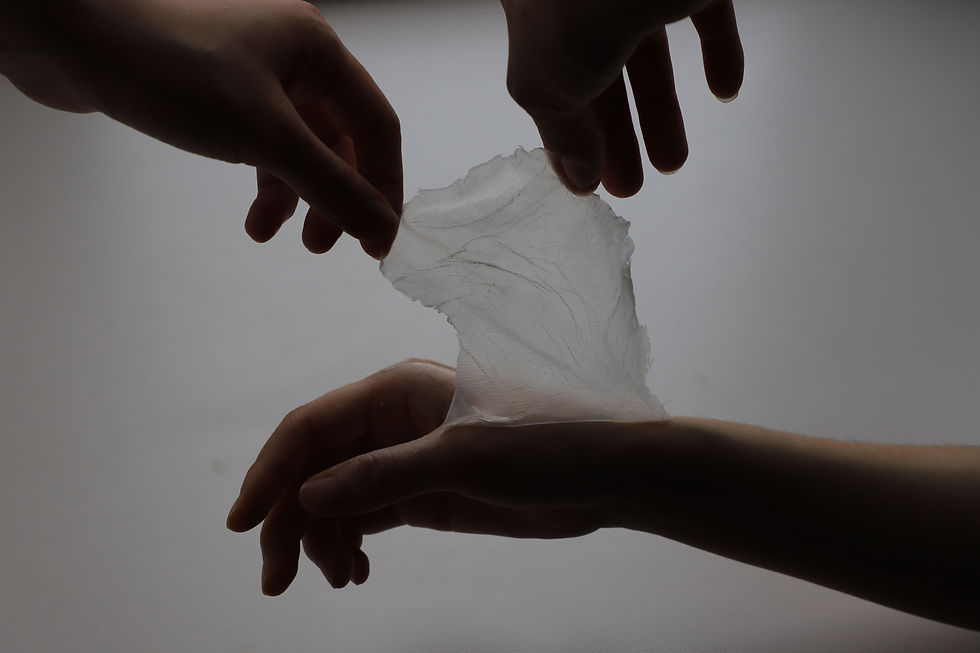
私は、人々に使い古された物と、皮膚の型の収集を通して、「それ ぞれのかたりて」をテーマにインスタレーションを制作しています。 使い古されていくにつれて、少しずつ色褪せ、歪んでいく衣服や家 具。それは私達の日々の一部であり、私たちの癖や匂いといった特 徴に寄り添うかのように、身体性を帯びていきます。また、皮膚は 時間が経つにつれて、剝がれ、少しずつ生え変わり、絶えず私たち の体内外で、身体を消費させながら、毎日、毎時、毎分と、誕生と 死別を繰り返しているように思えます。 「それぞれのかたりて」の作品制作は、2019年から現在に至るまで、 古着や古家具を収集すると共に、シリコンを持ち主の皮膚に塗り、 皮膚の模様や汚れといった、絶えず生まれ変わり続ける身体の痕跡 を型取った膜のようなもの。そして、古着や古家具といった過去の 身体性を身に着けた物を掛け合わせることで、もう一度、過ぎ去り 消えゆく記憶へ、存在性を与える試みをしています。
-Story Teller-
I am creating an installation on the theme ‘Each Telling ’ through a collection of objects that have been used by people and skin moulds.
Clothes and furniture gradually fade and become distorted as they are used and worn. They are part of our daily life and take on a physicality, as if they are attached to our habits, smells and other characteristics. The skin peels off and grows back little by little as time goes by, constantly consuming our bodies inside and outside our bodies, and seems to repeat birth and death every day, every hour, every minute.
The production of the work “Each of Us” is a collection of old clothes and furniture from 2019 to the present, as well as silicone applied to the owner's skin, which is like a membrane moulded from the traces of the body's continual rebirth, such as skin patterns and stains. By combining old clothes, furniture and other objects with the physicality of the past, the artist attempts to give presence to memories that are passing away and disappearing once more.


-それぞれのかたりて / 在り続けることへ-(2023)
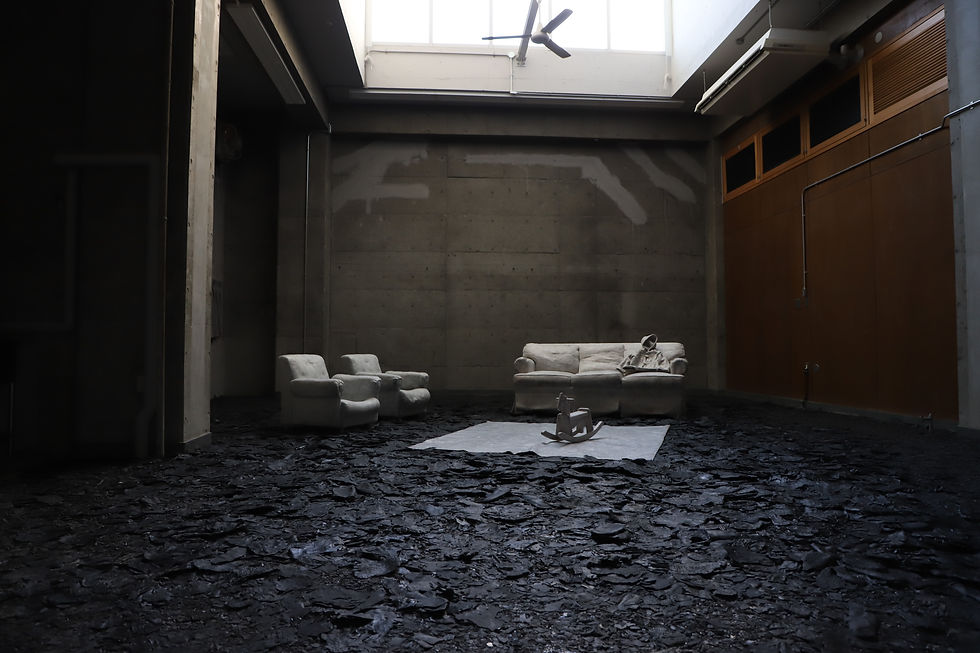
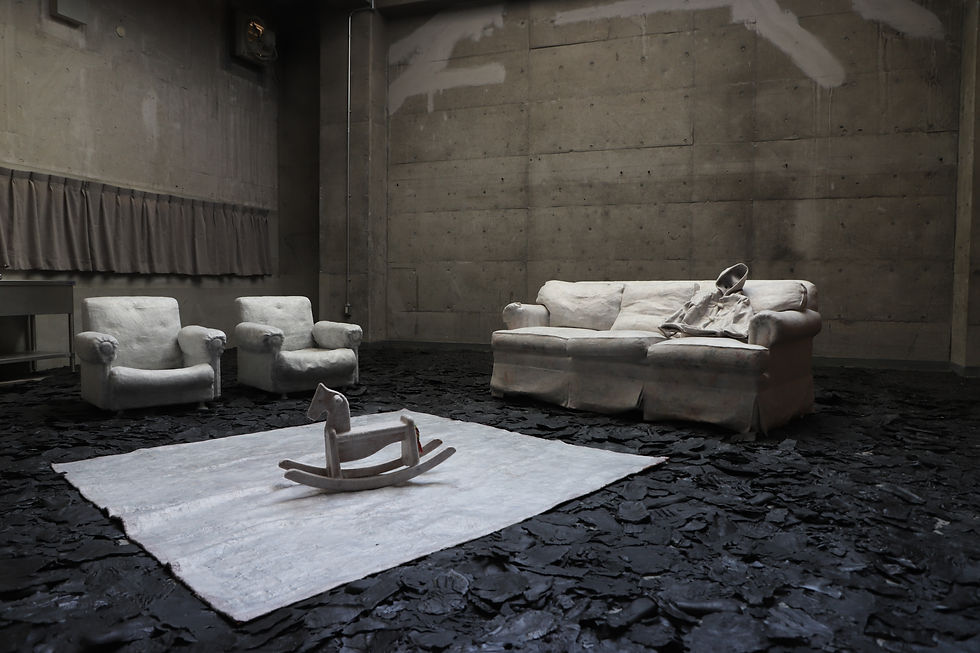
何十万枚もの薄い皮膚のようなものが、何重にも丁寧に、使い古された家具 や衣類たちの表面にレイヤーされている彫刻作品たち。機織り機など大型機 械を生産していた旧山叶で実際に使われていた家具やユニフォーム、そして 池田が富士吉田市でリサーチの中で会った人 たちの古着や私物が繭のように 覆われている。表面を形作る薄い”皮膚”たちは、富士吉田に住む、テキス タイル産業をこれまで支えてきた 人たちの手足をシリコンで型取りして一枚 一枚作られている。それはいわば誰かの手垢のようで、ゆっくりとモノや空 間の表面に積雪され、 数多の職人や従業員がかつてはこの工場跡を行き来し ていた歴史を示唆する。 中 池田杏莉は喪失の痕跡を、モノや空間の中から浮かび上がらせることで、 れぞれの”かたりて”の物語の収束点を作るという。床に敷か れた黒い落ち 葉のような皮膚たちを踏み割りながら工場跡の残り香に「耳をすませる」我々 にとって、それは畏怖として映るかもしれない。 た だ 、時 に 芸 術 は そう い っ た 静 か な 向 き 合 い を 見 届 けるところ に 、意 義 が あ ると 考 える 。(テキスト:キュレーター 丹原健翔)
-Storytelling /To continuing to be -
Hundreds of thousands of thin, skin-like textures are carefully layered on the surface of used furniture and clothing to create life-size sculptures. The furniture and uniforms were all actual objects that were used in this factory building, where large machinery such as industrial looms were produced. These objects, as well as old clothes and personal belongings of people Ikeda met during his research in Fujiyoshida, are covered in these semi-transparent cocoons. The thin "skin" that forms the surface is individually handmade from silicon molds of the hands and feet of the people who live in Fujiyoshida and who have contributed to Fujiyoshida’s textile industry. As if to echo the actual handprints that would have slowly accumulated on the surfaces of these used objects and spaces, the skin represents the history of the many craftsmen and employees who once worked or visited this factory site.
Ikeda says he creates these sculptural ghosts, or “remnants of loss,” so as to create closure for the individuals who helped in his production. These stories are personal and withheld from the viewer who, in an ironic gesture, "listens" to the various remnants of the factory ruins as he or she steps through the black, leaf-like skin on the floor. As a visitor these stories are forever untold – but sometimes art’s significance lies in the opportunity for the viewer to witness the quiet process and find a larger story within it.(Text: curator Kensho Tanbara)


-それぞれのかたりて / 蓋をした後悔へ-(2024)
時間と共に確実に変化し、ある時には突然目の前から喪失する私達の「日々」や「親しい人々」、そして「自身」。これらが、点在した部屋や景色に、 私達は喪失した存在達を見ることがあります。それは、その存在達への愛なのか。それとも後悔なのか…。 本展示では、実際に家族団欒の場に使われていた古着や古家具を、約60万枚にもなる皮膚の膜のようなもので包んだ彫刻。そして、床に敷かれ た黒い落ち葉のような皮膚を踏み割りながら、私や鑑賞者の皆様が持つ、それぞれの喪失した存在達への記憶を追憶と、喪失する時間を体感する インスタレーションです。 身体と衣服の間にできる関係性から、忘れゆく何気なくも、大切な「日々」、そして存在として喪失しても尚、私達の前にあり続けることとは、 また喪失との共生について、内省的な対峙を試みています。
-Storytelling / Dear Regret-
Our “days”, our “close people” and our “selves” change steadily over time and are at times suddenly lost before our eyes. In the rooms and landscapes dotted with these, we sometimes see these lost beings. Is it love for them? Or is it regret? In this exhibition, sculptures of old clothes and furniture that were actually used in family reunions are wrapped in a kind of skin membrane, amounting to about 600,000 pieces. The installation is a reminder of the memories that I and the viewers have of each of our lost loved ones, and an experience of the time of loss, as we step through the black, leaf-like skin on the floor. From the relationship that forms between the body and the clothes, I am attempting an introspective confrontation of the casual but important “days” that we forget, and how they continue to be in front of us even after we have lost them as beings, and how we can live in harmony with loss.